

A new chapter in sustainable construction has begun and the very first Circular Path certificate has been awarded to Keola Ltd, a company already turning heads with their commitment to building smarter and cleaner.
Keola recently scooped up three awards at the 2025 Master Builders House of the Year, including a special award for Waste Minimisation. Now, they’ve made history again by becoming the first company recognised under the Environmental Innovation Centre’s (EIC) new Circular Path Certification.
Waste diversion on-site
Keola’s certification is based on their eight-unit residential housing project on May Road, where waste management was built into the project plan from the start.
The results were impressive:
• 3.7 tonnes of timber fencing diverted
• 2.7 tonnes of HDPE pipe recycled
• 70kg of polystyrene saved from landfill
The project had a target of diverting 70% of total waste from landfill, and the final outcome exceeded expectations with a 78% diversion rate. This was achieved by creating a site-specific sustainable waste management plan, supported by regular planning, education and action.
Why Circular Path matters
Until now, many smaller builders seeking to reduce plastic waste sent to landfill have had no clear or practical way to validate their achievements. We intend for Circular Path to fill that gap. The certification recognises real, measurable improvements in waste minimisation. It has been designed to be practical and affordable, making it accessible to both larger companies and smaller building firms who want to start taking measurable steps.
A pathway toward the circular economy
Circular Path is part of a broader vision to support a circular economy for the construction sector. Whereby, instead of materials being used once and sent to landfill, a circular system keeps resources in use for as long as possible through smarter design, reuse and recycling. For construction companies, this means less waste in skips, lower carbon emissions, and better outcomes for clients and communities.
At present, Circular Path is focusing mainly on plastic waste streams, such as shrink wrap, polystyrene, and pipe offcuts, which are a major challenge on most sites. Over time, the certification will expand to cover all major construction waste streams - including timber, plasterboard, metals, and packaging.
How certification works
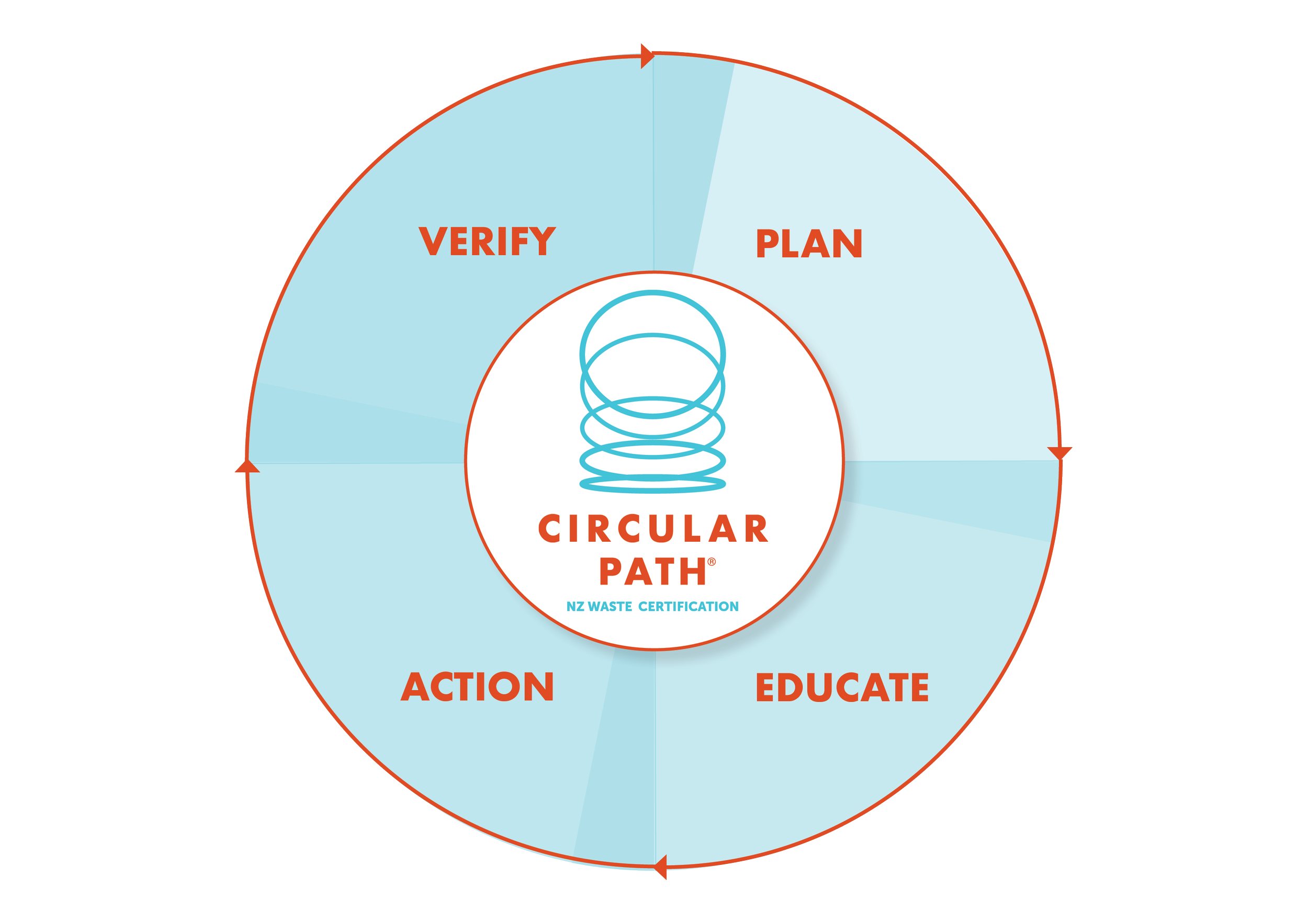
Circular Path Certification is built around a straightforward framework designed for building companies of any size. The aim is to reduce waste through a practical, step-by- step process that encourages planning, education, action, and verification.
Companies start by creating a simple waste management plan, educating staff, and putting systems in place on site — such as clear signage or waste sorting stations.
Progress is measured through a points-based system that rewards actions like reducing, replacing, reusing, and recycling materials. Certification is awarded once companies meet the basic requirements and show measurable results, with regular audits to keep standards strong.
Why should builders get on board with certification?
Circular Path is one of a few types of NZ-based certification schemes that can be adopted. For builders, the benefits of certification go beyond environmental outcomes
(for more information see the EIC article in the March 2025 issue of Building Today) :
• Cost savings – less waste in the skip means fewer skips and lower disposal fees.
• Site efficiency – clear waste processes keep sites tidier and safer.
• Client trust – more homeowners and developers are looking for confirmation that their builder is working sustainably.
• Industry recognition – leading companies are being noticed for their waste management efforts.
Keola sets the standard
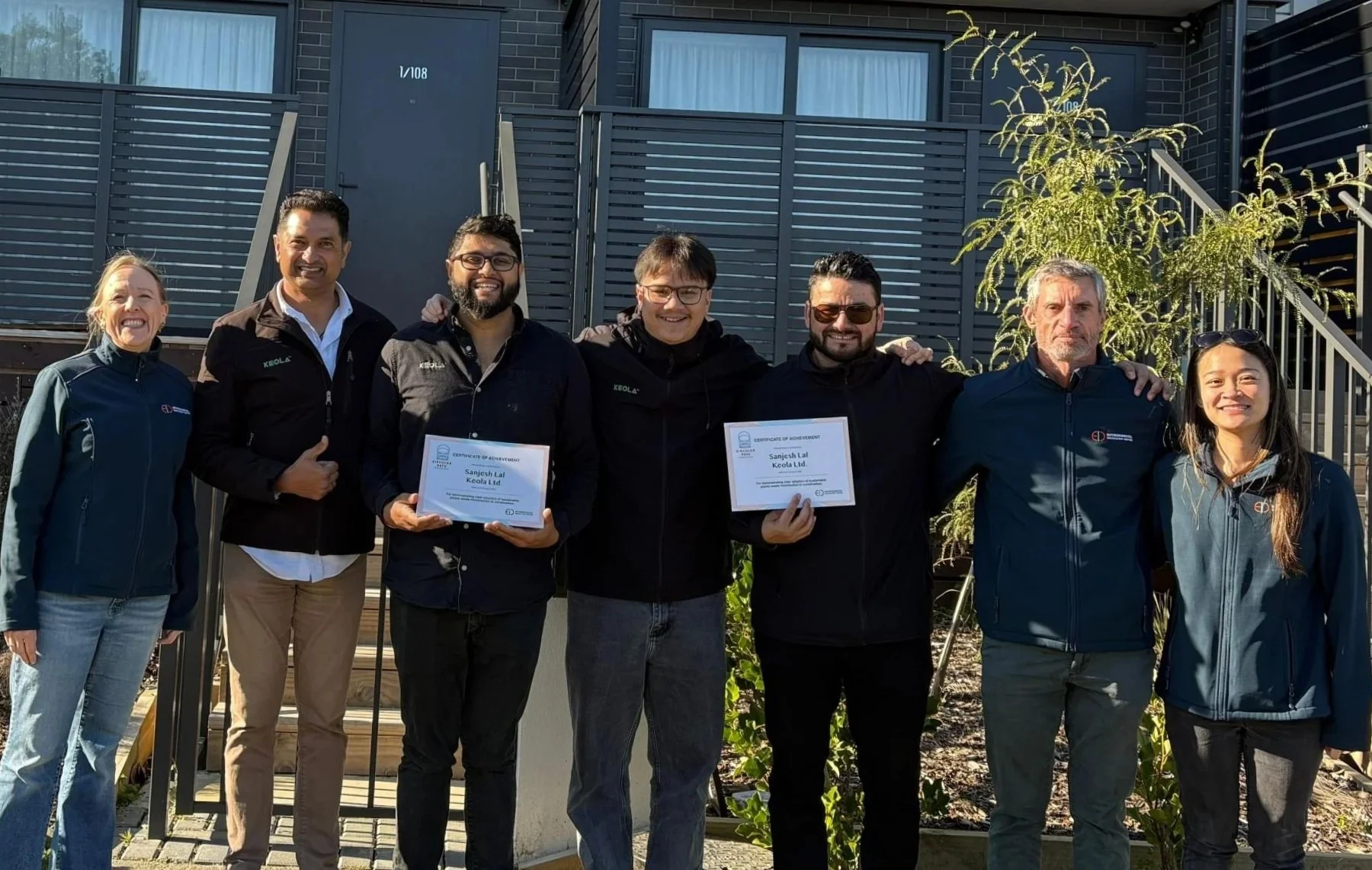
EIC and the Keola Team with their Circular Path certificates.
For Keola, certification has confirmed the success of a waste minimisation strategy already in place and demonstrated that ambitious targets can be met in practice. Their achievement sets a benchmark for other companies considering Circular Path.
The future of waste in construction
EIC’s aim is that more companies will adopt the certification, helping to transform waste practices across the industry. Keola’s achievement shows that significant waste diversion is possible on busy, real-world projects. This milestone is only the beginning. The goal of Circular Path is to start companies on their waste management journey, and formally recognise those that are making planned, verifiable and real differences in resource and waste management.
Circular Path is currently being tested with select companies. If you would like us to contact you when it launches, please contact penny@environmental-innovation.nz