

The Dunedin area currently has limited local recycling and recovery options for certain construction waste materials, such as treated timber, fibre cement board, PVC and HDPE pipes, plasterboard, polystyrene and soft plastics. While some local solutions and facilities exist, they often don’t have the capacity to service the whole area.
On the other hand, Christchurch has well-established processing facilities that can take many of these materials. So how can we get materials from where they are generated to where they can be recovered?
This is where rail comes in. EIC has been investigating moving construction waste materials out of Dunedin and to Christchurch for recovery, using the rail system. It’s a relatively simple idea, but one with significant upside. Rail is a low-carbon emission transport option for long distances, and importantly, many freight routes from the south to the north already run below full capacity. By adding containers of construction waste to these existing services, the system can effectively “backload” materials that would otherwise go to landfill.
Carbon emissions can be created during transportation or when new materials are made – if the energy used is from fuels such as oil, gas and coal.
Our calculations show that for some materials, carbon emissions generated to transport (via rail), process and recycle waste (into new products) are lower than when producing new materials (from scratch). This is because some materials require a lot of energy (hence fuel and hence carbon emissions!) to make, such as polystyrene, PVC, polyethylene and gypsum.
However, not all materials stack up the same way. Based on the recycling and recovery pathways currently available for them in New Zealand, timber and fibre cement board generate higher carbon emissions whentransported (via rail), processed and recycled rather than simply creating new timber or fibre cement board products (Figure 1).
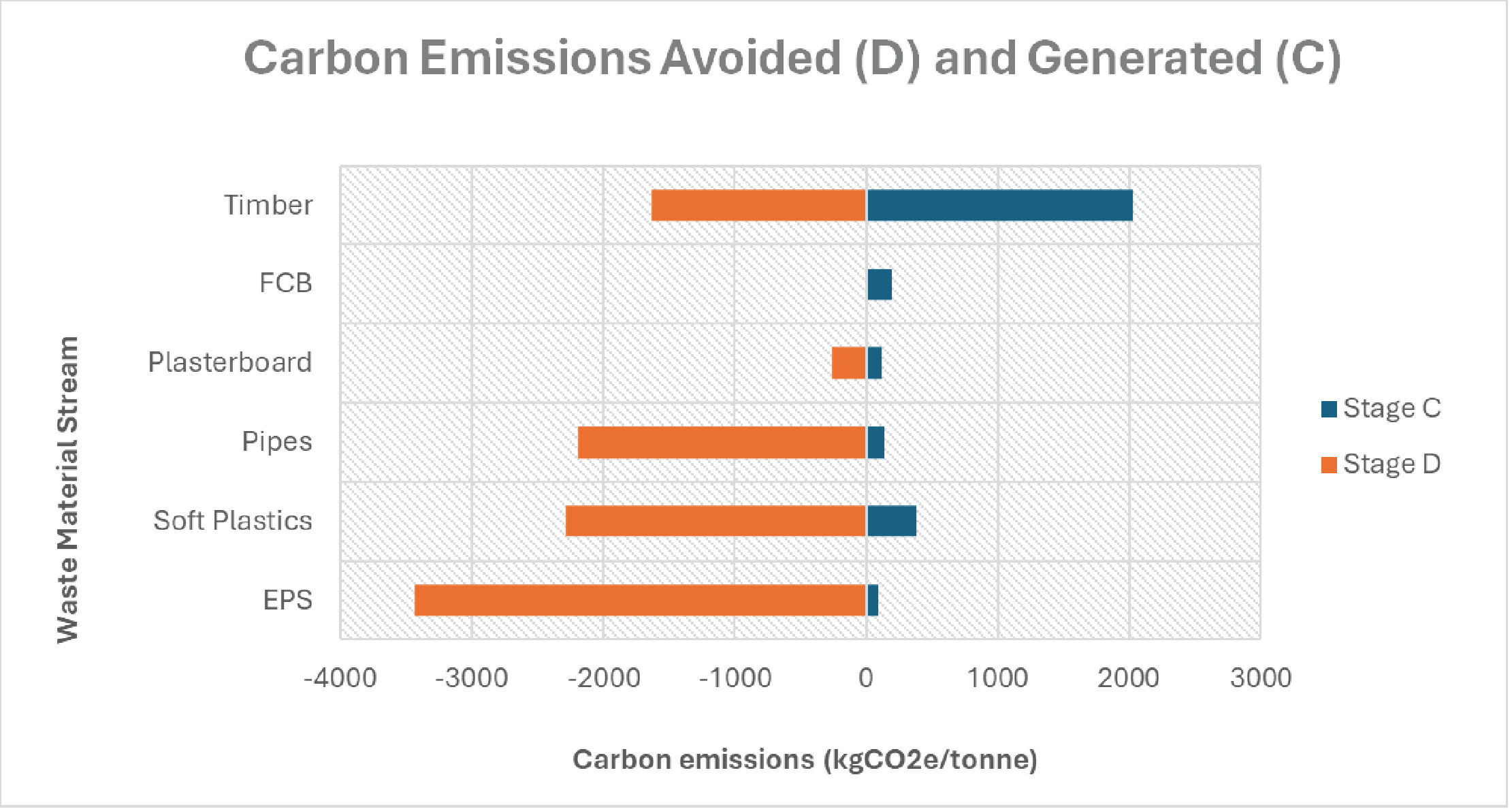
Figure 1: Carbon emissions of the proposed rail transport and recycling routes for waste materials in Dunedin
In this graph, Stage C (blue bars) represent emissions (from transporting, processing and recycling materials) and Stage D (orange bars) represents emissions 'avoided' by avoiding the extraction of new, raw materials and substituting them with recycled materials. The negative values (orange bars) show ‘avoided’ emissions when the materials are transported (by rail), processed, and recycled. A net benefit occurs where the orange bars are larger than the blue bars. So, (in terms of carbon emissions) for pipes, soft plastics and EPS, it is well worth investigating moving these types of waste materials via rail for recycling.
Right now, we are proposing a targeted, practical trial: using rail to transport pipe waste from Dunedin to Christchurch for recycling, as well as soft plastics. Pipes are a logical starting point. They are relatively easy to separate on site, there are no current recycling options for them in Dunedin, and their value has increased significantly, with plastic pipe costs rising by as much as 36% recently due to the closure of the Strait of Hormuz [1]. Soft plastics would also be moved to Christchurch for recycling, taking up any remaining space within the rail containers. Keeping these materials in circulation locally, rather than relying on imported raw materials, makes both environmental and economic sense. It would reduce the volume of waste sent to landfill while also lowering the carbon and financial costs associated with producing new materials, and make New Zealand more self-reliant.
If successful, this trial could scale to include:
More construction sites across Dunedin and the surrounding areas
Centralised waste collection and consolidation hubs
Additional waste streams and recycling pathways
It could also support emerging infrastructure, such as Dunedin City Council’s planned Resource Recovery Park, by ensuring that sorted materials can be efficiently transported to recycling options.
Looking ahead, the vision is to expand this model beyond Dunedin. Bringing other lower South Island areas into the system, and widening the range of materials collected, could help build a more connected, national approach to construction waste. The cost of this transport system (including setup, operating costs, and the transport itself) would decrease with economies of scale, as more companies take part.
The long-term goal is clear: link up recycling infrastructure across New Zealand, reduce the construction industry’s burden on landfill, and retain the value of materials within the local economy.
[1] Gibson, A. (2026, April 15). Fletcher Building warns its plastics division faces price hikes of up to 36%. NZ Herald. NZ Herald article